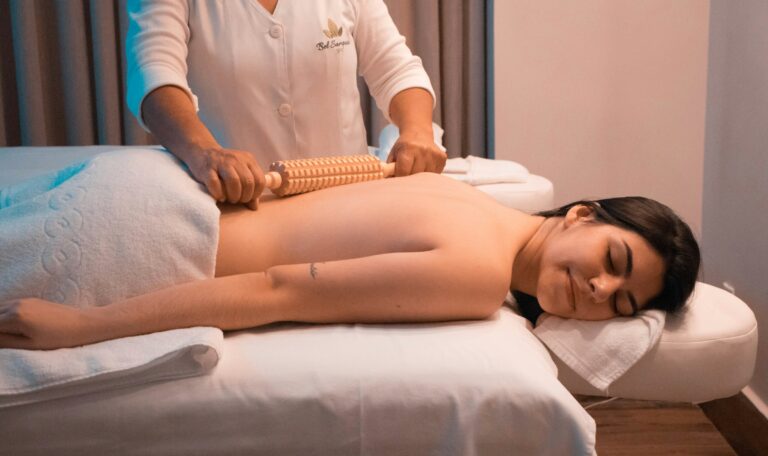

Zatrudnienie masażysty z Tajlandii, Filipin lub Indonezji może być dla salonu SPA, hotelu czy centrum wellness sposobem na poszerzenie oferty o tradycyjne techniki masażu. Dla przedsiębiorcy oznacza to jednak nie tylko znalezienie odpowiedniego specjalisty, ale również konieczność dopełnienia szeregu formalności.
Is it enough to obtain a work permit? Can a massage therapist from the Philippines be employed on a contract-for-services basis? How can you check an employee’s qualifications, and who is responsible for ensuring the legality of their employment if the recruitment is carried out by an agency?
These are questions that should be answered before signing a contract with a candidate or a foreign recruitment agency. In practice, employing foreign nationals in the spa and wellness sector requires consideration of several interrelated areas: work and residence permits, employment law, professional qualifications, remuneration policies and cooperation with recruitment agencies. We explain what an employer planning to hire a massage therapist or spa therapist from South-East Asia should check, and at which stages of the process problems may arise.
1. Hiring a massage therapist from Asia – where to start?
An employer who has found a suitable candidate abroad often wants to arrange a date for their arrival and the start of their employment as soon as possible. However, the first step should be to plan the entire recruitment process and determine which documents will be required. From 1 June 2025, the basic rules governing the employment of foreign nationals are set out in the Act of 20 March 2025 on the conditions governing the employment of foreign nationals within the territory of the Republic of Poland.
In the case of third-country nationals, it is generally necessary to hold both a valid authorisation to work and a residence permit entitling them to do so.
Can a massage therapist from Thailand, the Philippines or Indonesia be employed on the basis of a declaration?
As a general rule – no.
The simplified declaration procedure is available only to nationals of certain countries. According to official information, it applies to nationals of Armenia, Belarus, Moldova and Ukraine. Thailand, the Philippines and Indonesia are not included in this group.
In practice, the owner of a massage parlour or spa should, first and foremost, determine:
- what will be the appropriate legal basis for the legalisation of employment;
- what type of residence permit the candidate holds or will hold;
- Is a work permit required?;
- whether the terms of the proposed contract will be in accordance with the relevant decision or authorisation.
It is therefore not worth starting by arranging for an employee to come to Poland before the correct recruitment procedure has been established.
Recommendation for the employer: a well-planned process legalisation of work of foreigners should take place before recruitment and any financial commitments relating to bringing an employee to the country.
2. A work permit is not the same as legal residence
This is one of the most important distinctions to bear in mind. An employer may obtain a work permit for a foreign specialist, but simply holding this document does not in itself mean that the employee can legally reside in Poland and commence employment. The foreign national must also hold an appropriate residence permit entitling them to work.
That is why it is worth answering two questions right from the recruitment stage:
- Is the candidate still abroad, or are they already in Poland?
- On what grounds is he or she staying, or will he or she be staying, in Poland?
The next steps depend on this. At the International Law Practice, we deal with both the legalisation of employment and issues relating to regularising their stay and obtaining a residence card. It is worth considering these issues as a whole. Even properly prepared employment documentation does not automatically resolve all issues relating to a foreign national’s residence.
3. A contract with a foreign national – why is it not just a formality?
Once the employer has obtained the required work permit, the matter of drawing up the relevant contract remains. However, this stage should not be treated as merely signing a document prepared on the basis of a company template. The terms and conditions of employment should correspond to those set out in the permit, unless a specific change falls within a category for which the regulations do not require a new permit to be obtained.
Importantly, the Act also imposes an obligation to provide the competent authority with a contract with a foreign national in Polish – generally before the foreign national commences work. This means that the content of the contract is important not only for subsequent settlements between the employee and the employer, but also for the correct completion of the employment legalisation process.
The contract should form part of a pre-planned procedure, rather than being a document drawn up only just before work begins.
4. Should a massage therapist be employed under an employment contract or a contract for services?
Massage salons, hotels and wellness centres employ various models of collaboration. Massage therapists are sometimes employed either under an employment contract or on the basis of civil law contracts. From an employer’s perspective, a contract for services may seem a more flexible solution. However, this does not mean that it should be chosen solely because of lower costs or easier organisation of the working relationship. What matters most is that, how the work will actually be carried out.
If the massage therapist:
- carries out work at a specific location;
- works to a set timetable;
- reports to the salon’s management;
- provides customer service in person;
- uses the employer’s facilities;
- is subject to the company’s organisational rules,
It is necessary to analyse whether such a model of cooperation exhibits the characteristics of an employment relationship. The mere fact that a document is termed a „contract for specific work” does not, in itself, determine the actual nature of the employment relationship.
The differences between the various forms of cooperation are also described in State Labour Inspectorate.
Incorrect classification of a contract can be particularly problematic for a business owner who employs a large number of foreign nationals or runs several branches. It is therefore advisable to analyse how work is actually organised before choosing the type of contract.
5. Does a massage therapist from abroad need to have medical qualifications?
This is an issue that may raise concerns, particularly within the spa and wellness sector. A salon owner planning to employ someone to perform traditional Thai or Balinese massage should establish exactly what the scope of the services they will provide will be. One should not automatically assume that anyone with experience of performing massages abroad is automatically authorised to provide any type of such service in Poland.
At this point, it is important to distinguish between typical wellness activities and the practice of a medical profession. Polish legislation classifies massage therapists as medical professions covered by the Act on Certain Medical Professions. A person practising as a massage therapist must meet the professional qualification requirements and be entered in the Central Register of Persons Authorised to Practise a Medical Profession.
However, this does not mean that every person who performs a relaxation massage in a hotel or spa automatically practises the profession of massage therapist within the meaning of the Act.
The actual scope of the services provided is of key importance.
Before taking on an employee, it is therefore worth establishing:
- whether he will only be performing relaxation and wellness massages;
- whether the treatments on offer will be presented to clients as therapeutic or rehabilitative;
- how the employee’s role will be defined in the contract and marketing materials;
- whether the scope of duties may fall within the remit of a regulated or medical profession.
It is not advisable to leave these matters to be resolved once the collaboration has already begun. It is best to consider them before the job advertisement is published.
6. „We are looking to hire a masseuse from Thailand” – is such an advert permissible?
In the case of Thai or Balinese massage, business owners often emphasise the authenticity of the services they offer. It also happens that they wish to employ someone from a specific country, viewing their origin as part of that authenticity. But is it permissible to state explicitly in a job advert that the salon is looking for a massage therapist of a specific nationality?
This issue should be approached with caution.
Preferences based on nationality or gender may, in fact, conflict with the principles of equal treatment in employment. It is one thing to require a candidate to have knowledge of specific massage techniques, professional experience or to have completed relevant training; it is quite another to make employment conditional on a particular nationality.
From an employer’s perspective, it is safer to focus the job advertisement on professional skills, such as knowledge of traditional Thai massage, experience of working in a spa, or completion of specialist courses.
It is therefore worth ensuring not only that the contract is in order, but also that the recruitment offer is properly prepared.
7. When a massage therapist is employed through an agency – who is actually the employer?
The recruitment of workers from Asia often involves intermediaries. These may include a Polish employment agency, a foreign recruitment firm, a local partner, or an intermediary operating directly in the worker’s country of origin. For a salon owner, such a partnership can be convenient. However, it is worth checking carefully what model of cooperation a particular organisation is proposing.
The most important thing is to distinguish between acting as a recruitment agent and actually placing employees with another employer.
W pierwszym przypadku pośrednik pomaga znaleźć odpowiednich kandydatów. Drugi przypadek może obejmować model, w którym dany podmiot zatrudnia pracowników, a następnie kieruje ich do wykonywania pracy na rzecz salonu. W tym drugim przypadku zastosowanie mogą znaleźć przepisy dotyczące pracy tymczasowej i działalności agencji zatrudnienia. Problem pojawia się wówczas, gdy firma określająca się jako agencja rekrutacyjna w praktyce zatrudnia pracowników i odpłatnie udostępnia ich innemu przedsiębiorcy.
Therefore, before signing a contract with an agent, it is important to establish exactly how the collaboration is to work and which party will perform each specific role.
We would also recommend our article to business owners interested in this topic: A two-year waiting period for a new temporary employment agency – does it apply to all foreign nationals?.
8. Hiring a massage therapist from the Philippines – what additional formalities do you need to bear in mind?
Recruiting an employee from the Philippines requires looking at the entire process not only from the perspective of Polish law. This is because the Philippines has its own system governing the overseas employment of its citizens. Depending on the recruitment model, the formalities carried out with the Philippine authorities responsible for migrant workers, as well as the way local agencies operate, may be significant.
It is therefore worth establishing the following before the process begins:
- Who will actually be recruiting staff in the Philippines?
- On what basis does the recruitment agency operate?
- Who will be responsible for preparing the local documentation and completing the necessary formalities?
Why is this so important? A situation may arise in which an employer on the Polish side obtains the relevant documents, but the employee still encounters problems travelling to Poland.
Proper preparation for international recruitment therefore requires taking into account both Polish legislation and the regulations of the employee’s country of origin.
9. Accommodation for foreign employees – how to avoid misunderstandings?
Businesses that bring in massage therapists from Asia often decide to provide them with accommodation as well. From an employment management perspective, this can be a convenient solution. However, it requires clear rules governing the use of the accommodation. Right at the start of the working relationship, it is worth clarifying who will be the tenant of the property, who will bear the costs of accommodation, and whether the employee will contribute towards them.
It is also important to define:
- Can accommodation-related charges be deducted from wages?;
- when an employee will be required to leave the premises;
- what rules on liability for damages will apply;
- whether the employee will be able to continue to use the flat after their employment ends, and under what conditions.
These are issues that may seem secondary at the recruitment stage. In practice, however, they relate to the day-to-day organisation of working relationships. We therefore do not recommend relying solely on verbal agreements. Where there are a significant number of foreign employees, it is worth considering drawing up a standardised template for accommodation documentation.
10. Commission-based pay for massage therapists – how should the payment terms be agreed?
In massage and spa salons, remuneration schemes that are partly based on the number or value of treatments carried out are common. For a business owner, this model can be attractive as it allows part of an employee’s pay to be linked to the number of clients served. However, this does not mean that it is sufficient simply to set a specific percentage for each massage.
The rules governing the calculation and payment of remuneration should be clearly set out in the contract.
It is worth including, first and foremost, the amount of the basic salary, the method of calculating commission, and the point at which the entitlement to receive it arises. It is also necessary to specify how cancelled appointments, discounts granted to customers, tips and individual settlement periods will be accounted for. If the working relationship is based on an employment contract or a contract subject to the statutory minimum wage, the commission scheme must not result in a breach of the minimum wage regulations.
A well-drafted contract clearly sets out the terms of the working relationship for both the employer and the employee.
11. Hiring a massage therapist from Asia – what should you check before starting the recruitment process?
Hiring a foreign specialist should be treated as a process requiring proper preparation. Before an employer signs a contract with a candidate or an agency, they should check the key aspects of the planned recruitment.
Checklist for employers:
- Determining the candidate’s country of origin and current residence status.
- Determining the correct basis for the legalisation of employment.
- Verification of an employee’s professional qualifications.
- To determine whether the proposed post falls within the scope of a regulated profession.
- Choosing the right type of contract.
- Review of remuneration and working time policies.
- Vetting a recruitment agency or recruiter.
- An analysis of the requirements in force in the employee’s country of origin.
- Preparing documentation relating to accommodation.
- Planning the procedure for further legalisation of residence.
Only once such an analysis has been carried out is it advisable to enter into financial commitments with a foreign intermediary.
The most common mistake when recruiting massage therapists from abroad
„We need to sort out a visa for the employee.”.
This is precisely how businesspeople often describe the entire process of bringing a foreign national to Poland. However, obtaining a visa is just one of the potential steps in a much broader procedure.
In fact, there are several interrelated issues that need to be taken into account:
Recruitment → legalisation of employment → legalisation of residence → professional qualifications → appropriate contract → cooperation with the agency → regulations of the country of origin.
Each of these areas requires appropriate preparation. A problem relating to any one of them may delay a foreign national’s start of work and, in certain cases, may even prevent them from being employed.
Therefore, an entrepreneur should take a holistic view of the entire process, rather than treating individual formalities as separate tasks.
FAQ – employers’ most frequently asked questions
Can a massage therapist from Thailand be employed on the basis of a declaration?
As a general rule, no. Thailand is not one of the countries covered by the simplified declaration procedure. The employer should determine the correct basis for legalising the employment.
Is a work permit sufficient for a massage therapist from the Philippines to start working in Poland?
No. In addition to the relevant legal basis authorising them to work, a foreign national must also hold a residence permit entitling them to work in Poland.
Can a massage therapist from Indonesia be employed on a contract-for-services basis?
Choosing the type of contract requires an analysis of the actual terms of the working relationship. If the way in which the work is carried out exhibits the characteristics of an employment relationship, simply calling the document a „contract for specific work” does not determine the nature of the employment.
Does a massage therapist providing relaxation treatments need to have medical qualifications?
This requires an analysis of the actual scope of the services provided. A distinction must be made between wellness activities and the practice of the medical profession of massage therapist, which is subject to separate requirements regarding qualifications and registration.
Does using a recruitment agency exempt the salon from verifying the employment arrangement?
One should not make such an assumption. The business owner should ascertain whether the agency merely acts as an intermediary in the recruitment process, or whether it actually employs staff and assigns them to carry out work for another organisation.
Are you planning to hire a massage therapist or spa therapist from Asia?
Before you begin the recruitment process and incur the costs of bringing an employee to Poland, it is worth checking whether the chosen employment model complies with the relevant legislation.
At the International Law Practice, we can carry out an audit of your planned recruitment, identify potential legal risks and advise on the correct procedure for the specific country of origin of the employee.
Please contact the International Law Practice and discuss your planned recruitment.
Legal status: September 2026. This article is for general information purposes only and does not constitute individual legal or tax advice or an opinion. The information provided relates to general legal issues and does not take into account the circumstances of any specific case. Before making any decisions based on this information, you should verify the current legal position and analyse your individual circumstances, seeking professional legal advice where necessary. Although every effort has been made to ensure the accuracy of this publication, changes in legislation, case law or practice may affect the validity of the information provided.